Demand for investment migration has surged among U.S. citizens, with applications for residency and citizenship programs roughly doubling in 2025, according to recent studies. Many affluent investors have increasingly sought out wealth-management strategies to diversify their legal, tax, and residency ties across multiple countries.
For Americans, the appeal is somewhat different from that of citizens of countries with weaker passports. A U.S. passport already provides enormous global mobility. Instead, wealthy Americans tend to view second citizenship as a form of diversification, providing their families with an alternative, greater geographic flexibility, access to different business environments, and, in some cases, favorable tax benefits.
Here are five programs attracting particular attention.
1. St. Kitts and Nevis
St. Kitts and Nevis remains one of the most prominent choices. St. Kitts and Nevis launched its program in 1984, making it the world’s longest-running citizenship-by-investment program.
Applicants can qualify through a contribution of at least $250,000 or through approved real estate investments starting at $325,000, depending on the route. The program generally does not require applicants to establish permanent residence on the islands.
For wealthy Americans, its attraction is straightforward: an established program, a relatively predictable process, and a second passport without the requirement to relocate. It is particularly appealing to families looking for a long-term backup option.
2. Grenada
Grenada is another popular choice. The country’s Citizenship by Investment (CBI) program was launched in 2013, granting citizenship to individuals who make a qualifying investment.The program offers citizenship through government-approved contributions or real estate: 1) a non-refundable contribution to the National Transformation Fund (NTF) of $235,000, or 2) a purchase in a government-approved real estate development of $270,000.No prior or subsequent residency is required. Eligible dependants include a spouse, dependent children up to age 30 in full-time tertiary education, and dependent parents or grandparents aged 55 and over.One of its attractions for U.S. investors is that Grenadian citizenship may make them eligible to apply for the U.S. E-2 treaty investor visa, subject to the E-2 program’s separate requirements. That makes Grenada somewhat unusual: for an American entrepreneur, the value of the passport isn’t necessarily about leaving the United States.
3. Antigua and Barbuda
Antigua and Barbuda appeals to wealthy families because of its family-friendly structure and relatively broad investment options.
The program offers several qualifying routes, including contributions to the country’s National Development Fund and approved real estate investments. Minimum qualifying investments generally begin around $230,000 for the contribution route, although total costs vary depending on the applicant’s circumstances and family size.Citizenship is granted directly, with no prior residency required, but CBI citizens must spend at least five days in Antigua and Barbuda within the first five years of holding citizenship.
The program’s attraction goes beyond the passport itself. Antigua offers a combination of lifestyle, family inclusion, and international mobility that makes it appealing to investors who want a second citizenship without making a permanent move.
4. Dominica
Dominica has long competed on the basis of simplicity and low entry cost.
The country’s citizenship-by-investment program starts at approximately $200,000 through its contribution route, with approved real estate options also available.
For wealthy Americans, Dominica’s appeal is less about replacing the U.S. passport than about adding another layer of geographic diversification. Applicants generally do not have to relocate to the island, making the program particularly attractive to people who want flexibility without moving from their primary home.
5. Turkey
Turkey provides citizenship through a relatively straightforward investment route.
The Turkish program offers citizenship through qualifying real estate purchases starting at $400,000, with the investment generally required to be held for at least three years.
For Americans, Turkey offers something different from the Caribbean programs above: a large economy with a strategic geographic position straddling Europe and Asia, and the ability to obtain citizenship through an investment in real estate rather than a purely philanthropic contribution.
Dialing In
The U.S. remains the center for many of these investors’ businesses, families, and assets. Instead, a second passport is increasingly viewed through the lens of diversification—similar in concept to diversifying investments across currencies, markets, and jurisdictions.
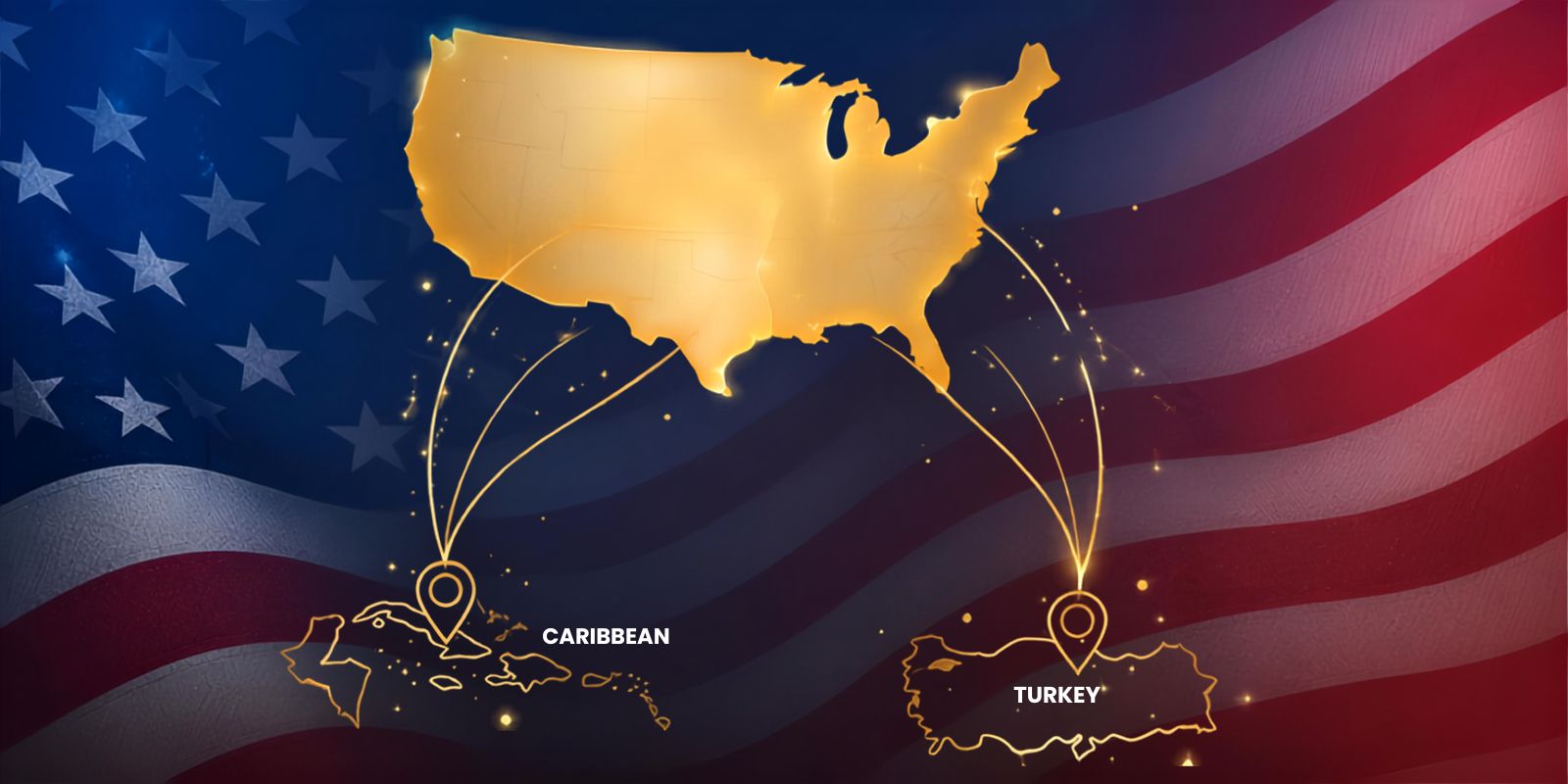
It helps explain why four of the five programs listed above are Caribbean programs. They generally offer citizenship without requiring applicants to relocate permanently, and their investment thresholds are considerably lower than those of some European alternatives.