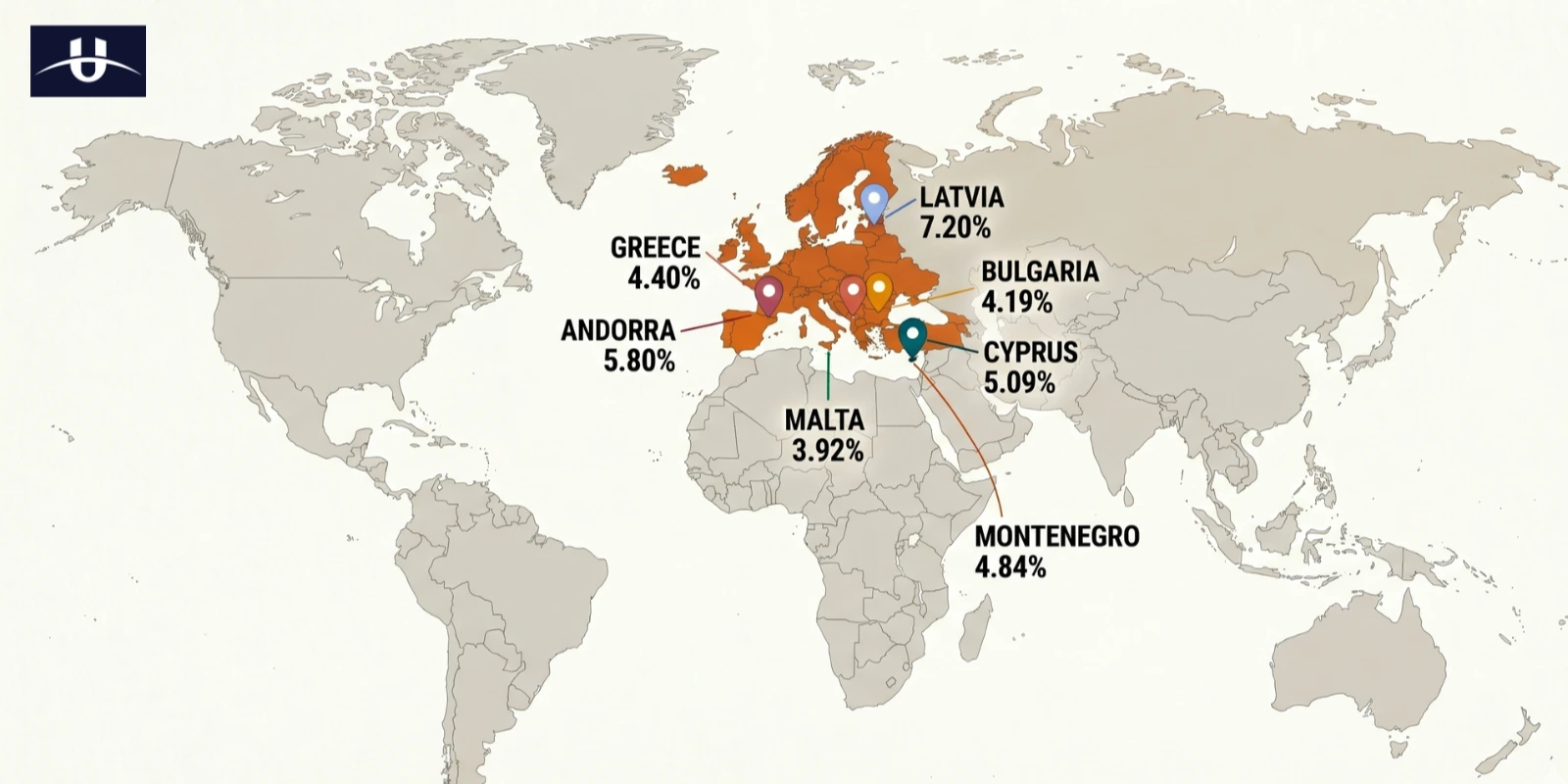
With rental yields as high as 7%, these European countries still let foreigners buy their way to residency. Here is what the rental math looks like across all of them.
Real estate investment is often the most popular golden visa route in such programs. For much of the investment migration market’s recent history, real estate has consistently dominated application volumes across programs.
That picture has slowly shifted in some countries, particularly in Europe. Portugal ended its real estate golden visa route in 2023. Spain closed its property route in April 2025. Ireland had already wound down its investor residency program. Greece raised its minimum thresholds in high-demand zones twice in one year.
The direction of travel is clear: governments weighing the domestic housing costs of investor-driven demand have been moving away from real estate as a qualifying route or restricting access to it with higher entry points.
Yet a significant number of European countries still offer property as a qualifying investment to residency or citizenship programs. This is because investor appetite for this asset class has not followed the policy trend, and for good reason: property is tangible, it produces income, and it appreciates.
For many high-net-worth individuals pursuing a second residency, it remains the investment most understand best.
That preference comes with a complicated set of choices. Minimum qualifying purchases range from €150,000 to over €1,000,000; rental market activity varies year-round; and tax treatment differs by jurisdiction. Some programs impose restrictions on how the qualifying property may be used, in some cases explicitly prohibiting short-term rentals.
This guide examines 7 European programs that still permit real estate as a qualifying investment route and evaluates the rental yields investors can expect based on the latest available market data.
All yields cited are gross* unless otherwise noted. Net yields are typically 1.5–2% lower, accounting for management fees, maintenance, vacancy, and transaction costs.
Latvia Golden Visa
Latvia is the lowest-cost EU residency route in this guide that offers a genuine real estate option.
The combination of an affordable entry threshold and strong rental returns makes it an underappreciated option for yield-focused investors seeking EU mobility.

Average Property Prices and Rental Yields
Latvia’s average gross rental yield stands at 7.20% (Q2 2026), the highest of any EU program covered here.
Riga averages 7.47%, with two-bedroom apartments across all locations yielding 8.34% and three-bedroom units reaching 7.50%. In the upscale Centrs district, two-bedroom apartments at €249,900 rent for €1,400 per month, yielding 6.72%.
Across Riga’s full market, one-bedroom apartments at €125,000 average €750 monthly rent and yield 7.20%. Jūrmala, the coastal resort city, averages 6.93%, with studios at €49,500 yielding 7.76%.
What the Minimum Investment Buys
The Latvia Golden Visa real estate route requires a minimum property purchase of €250,000, plus a one-time state fee of 5% of the property value. The property must be already constructed; off-plan purchases do not qualify.
Single properties must be located in Riga or within 30 kilometers of the city; alternatively, two properties may be acquired outside these areas, each with a minimum cadastral value of €40,000.
At €250,000 in Riga, investors are purchasing at the upper end of the city’s mid-market residential segment, typically a well-located two-bedroom apartment in a central or near-central district.
At this price point, market data indicate gross yields of approximately 6.5% to 8%, making Latvia the most yield-productive EU real estate program in this guide.
Yield Optimization Analysis
At the €250,000 threshold, a two-bedroom apartment in Riga’s Centrs or Agenskalns district achieves 6-8% gross on long-term residential lettings.
The qualifying property functions straightforwardly as a yield-producing asset, not an overpay for immigration access.
Latvia’s personal income tax rate of 20% is low by EU standards. Permit holders who spend fewer than 183 days per year in Latvia are generally not considered tax residents and are taxed only on Latvian-sourced income, which includes rental income from the qualifying property.
Rental Restrictions
Latvia imposes no program-level restriction on renting the qualifying property. Long-term and short-term lettings are both permitted under the program conditions.
Airbnb-style short-term rentals operate in Riga without a formal prohibition, and no golden visa-specific restrictions apply.
Investors should note that Latvia taxes rental income at the standard 20% personal income tax rate for tax residents.
Connect with UGlobal’s verified professionals in Latvia for expert guidance on this program.
Bulgaria Golden Visa
Bulgaria stands out among EU residency programs for offering a flat 10% income tax rate, the lowest in the EU, alongside a property market that remains among the most affordable entry points for an EU residence permit.
The country adopted the euro on January 1, 2026, eliminating currency risk for euro-zone investors and positioning the market for continued foreign interest.
Average Property Prices and Rental Yields
Bulgaria’s average gross rental yield stands at 4.19% (Q1 2026).
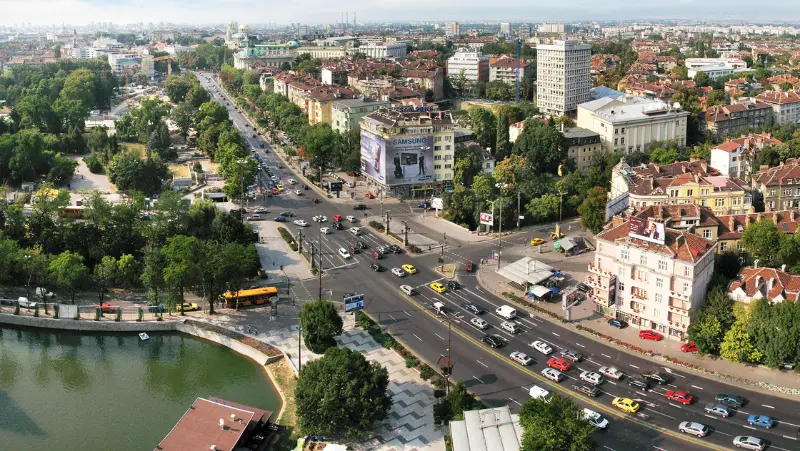
The capital Sofia averages 4.19%, with upscale Vitosha and Studentski Grad districts offering yields of approximately 5% or higher for smaller units, where student and young professional demand is concentrated.
In Varna, gross rental yields range from 3.07% to 5.12%, with a city average of 4.08%. Plovdiv averages approximately 4%. Sofia apartment prices reached approximately €2,300 per square meter in early 2026.
What the Minimum Investment Buys
The Bulgarian Golden Visa real estate route requires a minimum investment of €312,000 (approximately US$366,000) in Bulgarian real estate. The permit is issued as temporary residency, requiring at least one visit to Bulgaria per year and annual renewal.
At Sofia’s average of €2,300 per square meter, €312,000 buys an upscale apartment of approximately 135 square meters, a comfortable family-sized unit well above the city median.
In Varna or Plovdiv, the same budget reaches significantly further.
Yield Optimization Analysis
At €312,000, the best income case could be in Sofia’s mid-market districts such as Lozenets and Iztok, which sustain 4–5% gross on long-term lettings with very low vacancy. The citywide vacancy rate for long-term rentals in Sofia sits at approximately 3–6%.
Bulgaria’s flat 10% income tax rate meaningfully improves net returns compared to higher-tax EU jurisdictions.
For investors specifically seeking yield, Vitosha and Studentski Grad offer yields above 5% on smaller units at more modest entry prices.
Rental Restrictions
Bulgaria imposes no program-level restriction on renting the qualifying property. Long-term and short-term lettings are both permitted.
No Airbnb-specific prohibition exists at the national level, though municipal rules may vary. The flat 10% personal income tax rate applies to rental income for Bulgarian tax residents.
Connect with UGlobal’s verified Bulgaria professionals for expert guidance on this program.
Cyprus Golden Visa
Cyprus delivers a compelling combination: lifetime EU permanent residency from €300,000, a Non-Domicile tax regime that can exempt qualifying residents from Cypriot tax on dividends, interest, and foreign-sourced income, and a rental market anchored by one of the Mediterranean’s most active corporate hubs.
Average Property Prices and Rental Yields
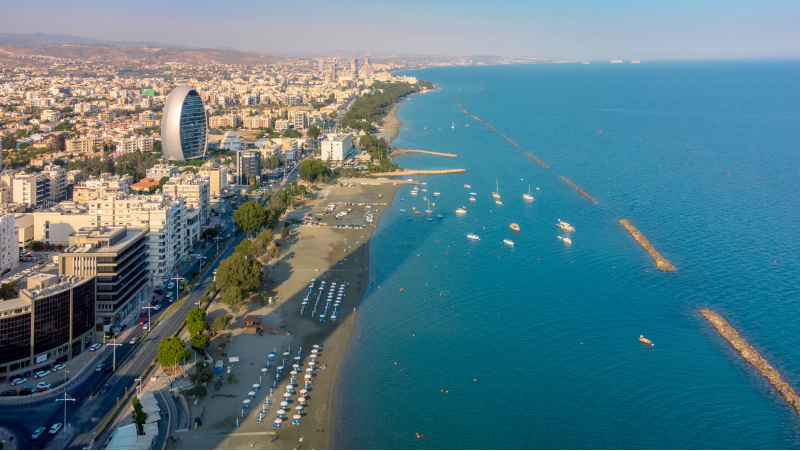
Cyprus’s average gross rental yield stands at 5.09% (Q3 2025). Limassol consistently delivers the highest yields on the island, averaging 5.5–6% gross on apartments and reaching 6.8–7.2% for well-managed two-bedroom units in corporate zones.
Nicosia, the capital, averages approximately 5%, offering the most predictable occupancy profile on the island. Paphos and Larnaca average 4–4.5%.
What the Minimum Investment Buys
The Cyprus Golden Visa real estate route requires a minimum purchase of €300,000 plus VAT in a new first-sale residential property from a developer. Up to two properties from different developers may be combined to reach the threshold. Secondary market purchases do not qualify under this route.
Cyprus apartments average approximately €2,600 per square meter, meaning €300,000 buys a quality two-bedroom unit of approximately 115 square meters.
Yield Optimization Analysis
The yield-optimization strategy in Cyprus points clearly toward Limassol. Corporate expats in shipping, fintech, and professional services sustain demand year-round and typically sign 12–24-month lease terms, minimizing vacancy and management costs.
At €300,000, a well-located Limassol two-bedroom can realistically generate 6–7% gross, translating to approximately €18,000–€21,000 annually before costs.
The Non-Dom tax regime, available to qualifying residents spending 60 days or more per year in Cyprus, exempts foreign-sourced income from tax, improving the effective return profile for internationally mobile investors.
Rental Restrictions
Cyprus imposes no program-level restriction on rental type. Both long-term and short-term lettings are permitted. Operators of short-term rentals must register with the Cyprus Tourism Organisation under its tourist accommodation licensing framework.
Connect with UGlobal’s verified Cyprus professionals for expert guidance on this program.
Greece Golden Visa

Greece’s golden visa occupies a uniquely aspirational space in the investment migration market. It delivers Schengen-area free movement, a credible pathway to EU citizenship after seven years, and access to one of Europe’s most celebrated property markets.
The tradeoff is a significant restriction on rental income, particularly in high-demand areas.
Average Property Prices and Rental Yields
Greece’s average gross rental yield stands at 4.40% (Q4 2025). Athens delivers the highest yields of any Greek city, averaging 5.43%, with the highest yields in working-class districts. In Patisia, one-bedroom apartments priced at approximately €83,000 yield 7.95%.
In Patision-Acharnon, one-bedroom units at €90,000 deliver 7.73%. The premium Kolonaki district yields only 5.54% on one-bedroom units at €260,000.
Thessaloniki’s average yield is 4.38%.
What the Minimum Investment Buys
The Greek Golden Visa operates under a tiered zone structure: Zone A, covering the Administrative Region of Attica (which includes Athens), the Regional Unit of Thessaloniki, Mykonos, Santorini, and islands with a registered population of more than 3,100.
Zone A requires a minimum investment of €800,000 in a single property of at least 120 sqm.
Zone B, covering all other parts of Greece, requires €400,000. Zone C, reserved for commercial-to-residential conversions and heritage building restorations, requires €250,000.
As such, most investors seeking Athens property must purchase at a minimum of €800,000 threshold. At Athens market prices, this buys a premium apartment in the upscale district of Kolonaki or a quality property in an established neighborhood well above median market pricing.
The Zone B threshold of €400,000 makes provincial cities and smaller islands accessible at market-rate pricing.
Yield Optimization Analysis
The highest yields in Athens (7-8% in the Patisia or Kipseli neighborhoods) require buying below the €800,000 Zone A threshold, which investors must meet.
At €800,000, properties are in the premium segment where yields compress to 4% to 5.5%.
Outside Zone A, €400,000 buys genuinely yield-productive property in Thessaloniki (4.38% average) or other small cities.
The Zone C route at €250,000 for converted commercial buildings is the most yield-efficient entry, though finding qualifying inventory requires specialist local knowledge.
Rental Restrictions
Greece imposes a rental restriction for golden visa investors; short-term letting of the qualifying property is prohibited. This means Airbnb and comparable short-term rental platforms are explicitly barred for the qualifying property.
The investor is limited to long-term residential lettings, which may compress yields relative to the short-term rental rates achievable in Athens and on the islands.
Connect with UGlobal’s verified Greece professionals for expert guidance on this program.
Malta Permanent Residence Program (MPRP)

Malta’s Permanent Residence Program (MPRP) is among Europe’s most structured and layered programs. It bundles a government contribution, an NGO donation, and a property commitment into a single package that confers permanent residency for life.
The real estate component is lower than in most EU programs, but the overall financial commitment is higher once all components are included.
Average Property Prices and Rental Yields
Malta’s average gross rental yield stands at 3.92% (Q1 2026), slightly down from 4.05% in Q2 2025.
On the mainland, gross rental yields for apartments average 4.10%: one-bedroom units at an average purchase price of €210,000 and monthly rent of €750 yield 4.29%; two-bedroom units at €285,000 and €1,000 monthly rent yield 4.21%; three-bedroom units at €405,000 and €1,450 monthly rent yield 4.30%; and four-bedroom-plus units at €1,000,000 and €3,000 monthly rent yield 3.60%.
On Gozo, Malta’s second largest island, gross rental yields average 3.74%, with one-bedroom apartments at €157,000 and €450 monthly rent yielding 3.44%, and three-bedroom units at €240,000 and €800 monthly rent yielding 4.00%.
What the Minimum Investment Buys
The MPRP property requirement offers two paths: purchase of a qualifying residential property valued at a minimum of €375,000 (held for at least five years) or a long-term lease at a minimum annual rent of €14,000 for at least five years.
The €375,000 purchase threshold is above the typical mid-market Maltese price, placing investors in the upper-residential segment.
Total program costs are higher than the property alone: a non-refundable government contribution of €37,000, an administrative fee of €60,000, and a €2,000 donation to a registered Maltese NGO are required on top of the property commitment.
The program also requires a minimum net worth of €500,000, of which €150,000 must be in liquid financial assets.
Yield Optimization Analysis
At 3.92% average gross yield (Q1 2026), Malta’s residential market is among the lowest-yielding in this guide.
At the €375,000 minimum purchase price, a three-bedroom apartment on the mainland achieves approximately 4.30% gross, representing roughly €16,125 annually before costs.
For an investor seeking to maximize rental income within the MPRP framework, the lease route rather than purchase may be preferable: a €14,000 annual lease outlay preserves capital for deployment elsewhere, while a separately purchased residential property can be selected for yield rather than program compliance.
The total upfront non-refundable program costs of roughly €99,000 (contribution, administration, donation) should be factored into any real total-cost calculation.
Rental Restrictions
Properties owned by foreigners can be rented out, but only if the property resides in a specially designated area, is a villa, or holds a license from the Malta Tourism Authority under the ‘superior’ or ‘comfort’ category.
This constraint limits the pool of qualifying properties that can generate rental income, and investors should confirm a property’s eligibility for letting before purchase.
Connect with UGlobal’s verified Malta professionals for expert guidance on this program.
Montenegro Property Ownership Residence Permit

Montenegro is arguably one of Europe’s most underexplored golden visa markets and, for yield-focused investors, among the most interesting.
The country operates a property-based residency permit at one of the lowest entry thresholds on the continent, its Adriatic coastal market draws consistent tourism-driven demand, and its EU accession trajectory is steadily drawing investor attention to a market where property prices remain well below comparable Mediterranean destinations.
Average Property Prices and Rental Yields
Montenegro’s average gross rental yield stands at 4.84% (Q2 2026).
Podgorica, the inland capital, delivers the strongest long-term rental yields at a city average of 5.15%, with studios yielding 5.60% at €75,000 and one-bedroom apartments achieving 5.59% at €118,000.
Budva, the Adriatic resort town, averages 5.01% across its property spectrum: studios at €95,000 yield 5.68% and one-bedroom units at €145,000 yield 5.38%. Tivat, home to the Porto Montenegro marina, averages 4.36% with one-bedroom units at €220,000.
What the Minimum Investment Buys
Montenegro’s Property Ownership Residence Permit requires ownership of real estate with a minimum taxable value of €150,000, as assessed by the Tax Authority.
At €150,000, the investor can access a quality one-bedroom apartment in Podgorica or a studio to a one-bedroom unit in Budva. Both sit at or slightly above the minimum threshold, meaning investors would acquire mid-market assets rather than token-qualifying properties.
Yield Optimization Analysis
Montenegro’s €150,000 minimum qualifying investment is by far the lowest in this guide, which makes the yield equation particularly strong on a return-on-investment basis.
A one-bedroom in Podgorica at €150,000, yielding 5.59%, generates approximately €8,400 in gross rental income annually. Montenegro applies a flat 9% income tax rate, the lowest of any country in this guide, meaning the after-tax income position is materially stronger than in higher-tax EU jurisdictions.
Podgorica offers a strong case for year-round income, driven by domestic professionals and a growing expat community. Budva and the Adriatic coast deliver higher short-term yields in summer but are inherently seasonal.
Investors who want long-term rental stability rather than the overhead of holiday-letting may be better served by Podgorica.
Rental Restrictions
Montenegro’s Property Ownership Residence Permit imposes no restriction on rental type. Rentals of any duration are permitted under the residency conditions.
Montenegro has no national prohibition on short-term rental platforms, and Budva and Tivat have active Airbnb markets. Short-term rental operators are subject to standard tourism licensing requirements administered by the National Tourism Organisation of Montenegro.
Andorra Non-Lucrative Residency

Andorra is the outlier in this guide. It is the only non-EU microstate included; its minimum qualifying real estate investment is the highest on the list at €800,000 per property, and its rental market is structurally supply-constrained due to severe land scarcity and tight construction.
What it offers in return is among the most favorable personal tax environments in Europe: a flat 10% income tax on income above €24,000, with the first €24,000 fully exempt, and no capital gains tax, no wealth tax, and no inheritance tax.
Average Property Prices and Rental Yields
Andorra’s average gross rental yield stands at 5.80% (Q3 2025). Average apartment prices reached €4,440 per square meter as of Q3 2025, a 6.48% year-on-year increase, with Escaldes-Engordany leading at €7,400–€8,500 per square meter for new construction.
The average apartment rent in Andorra reached €3,168 per unit per month in Q3 2025.
More affordable parishes such as Sant Julià de Lòria and La Massana offer lower entry prices around €4,200–€4,500 per square meter with marginally higher yields.
What the Minimum Investment Buys
Andorra’s Non-Lucrative Residency requires a minimum total investment of €1,000,000 in qualifying Andorran assets, plus a non-refundable AFA deposit of €50,000.
Eligible assets include real estate, equity in Andorran companies, Andorran financial instruments, or Andorran public debt.
When using the real estate route, the qualifying property must have a minimum value of €800,000. This means investors are restricted to Andorra’s upper market: premium apartments or chalets.
Yield Optimization Analysis
At a 5.80% national average gross yield, an €800,000 property in Andorra la Vella or Escaldes-Engordany generates approximately €46,400 annually, a respectable absolute return, though yield-on-cost compresses at higher price points in the prime parishes.
Andorra’s rental market is structurally supply-constrained: land is scarce, construction is limited by geography, and housing stock is tight. This could support long-term stability in rental income.
Yet for investors whose worldwide income significantly exceeds €24,000 annually, the tax savings can substantially outweigh the yield differential versus higher-yielding but higher-taxed markets.
Rental Restrictions
Andorra restricts short-term rentals in key tourist and urban zones to curb speculative activity and protect housing affordability for local residents.
Investors purchasing qualifying property in high-demand areas such as Andorra la Vella or Escaldes-Engordany should verify whether the specific property and zone permit short-term commercial letting before committing to an Airbnb strategy.
Long-term residential lettings are unrestricted under the residency program.
*This article is for informational purposes only and does not constitute investment advice. Prospective applicants are encouraged to seek specialized legal and financial guidance before making any decisions.
*All figures are gross yields before taxes, management fees, and vacancy. Yield data sourced from Global Property Guide and Savills.