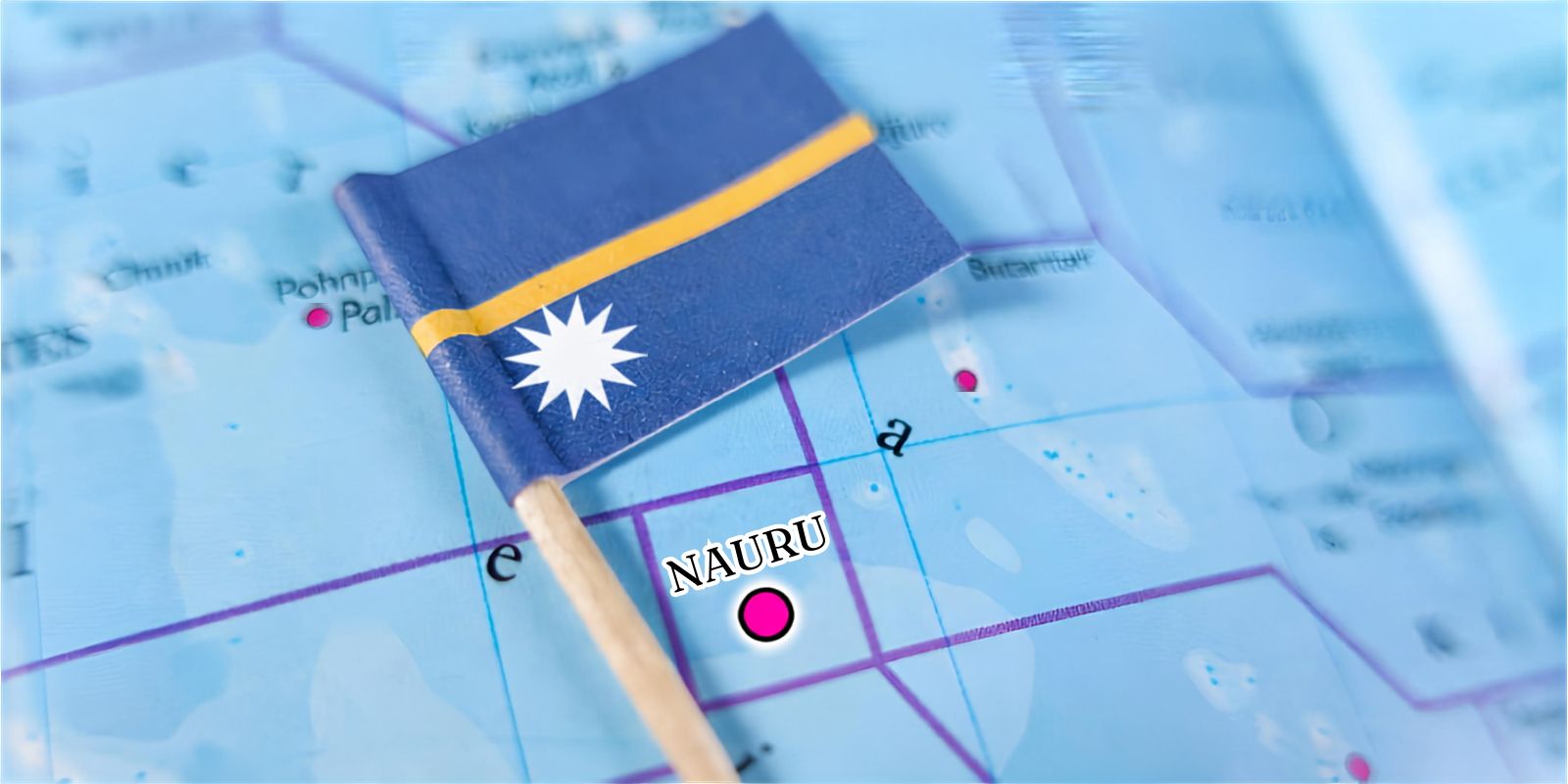
Nauru is likely a place you’ve never heard of. After all, the South Pacific Island is the third-smallest country in the world. You wouldn’t even blink when—or if—you found out that this week it changed its name to Naoero.
Its president said the name-change decision was made to match the spelling and pronunciation in the national language.
With only 11,000 people, the island located northeast of the Solomon Islands is about eight square miles in area, making it the second-smallest full-member state of the United Nations.
Now, the island nation is known for something else. Naoero has launched a citizenship-by-investment (CBI) program that allows eligible foreign nationals to obtain citizenship through a financial contribution of only $90,000, media reports.
Why is Naoero Launching a CBI Program, and What Are The Requirements?
The island reportedly introduced the initiative to help fund climate adaptation efforts, including a long-term plan to relocate about 90% of its families and infrastructure to higher ground as rising sea levels increasingly threaten coastal communities.
Decades of phosphate mining have left much of the island’s interior unsuitable for development, resulting in most residents and infrastructure remaining concentrated along vulnerable coastal areas. Government estimates place the cost of the first phase of the relocation project at more than $60 million.
The new CBI program offers citizenship to applicants who complete a four-stage due diligence process. A single applicant can currently qualify with a $90,000 contribution under a limited-time offer, reduced from the standard $115,000 fee. The passport provides visa-free or visa-on-arrival access to more than 85 destinations, including Singapore and Hong Kong. However, citizenship does not grant the right to own land in Nauru, where land ownership remains restricted.
The program would also include background checks, ongoing monitoring, and provisions allowing citizenship to be revoked for serious offenses. Officials have also rejected applications that failed to meet program requirements, although the total number of rejected applications has not been disclosed.
The initiative has reportedly granted more than 120 citizenships since its launch. While supporters view the program as a funding mechanism for climate adaptation, critics continue to question the broader implications of linking citizenship to financial contributions and the effectiveness of due diligence measures.