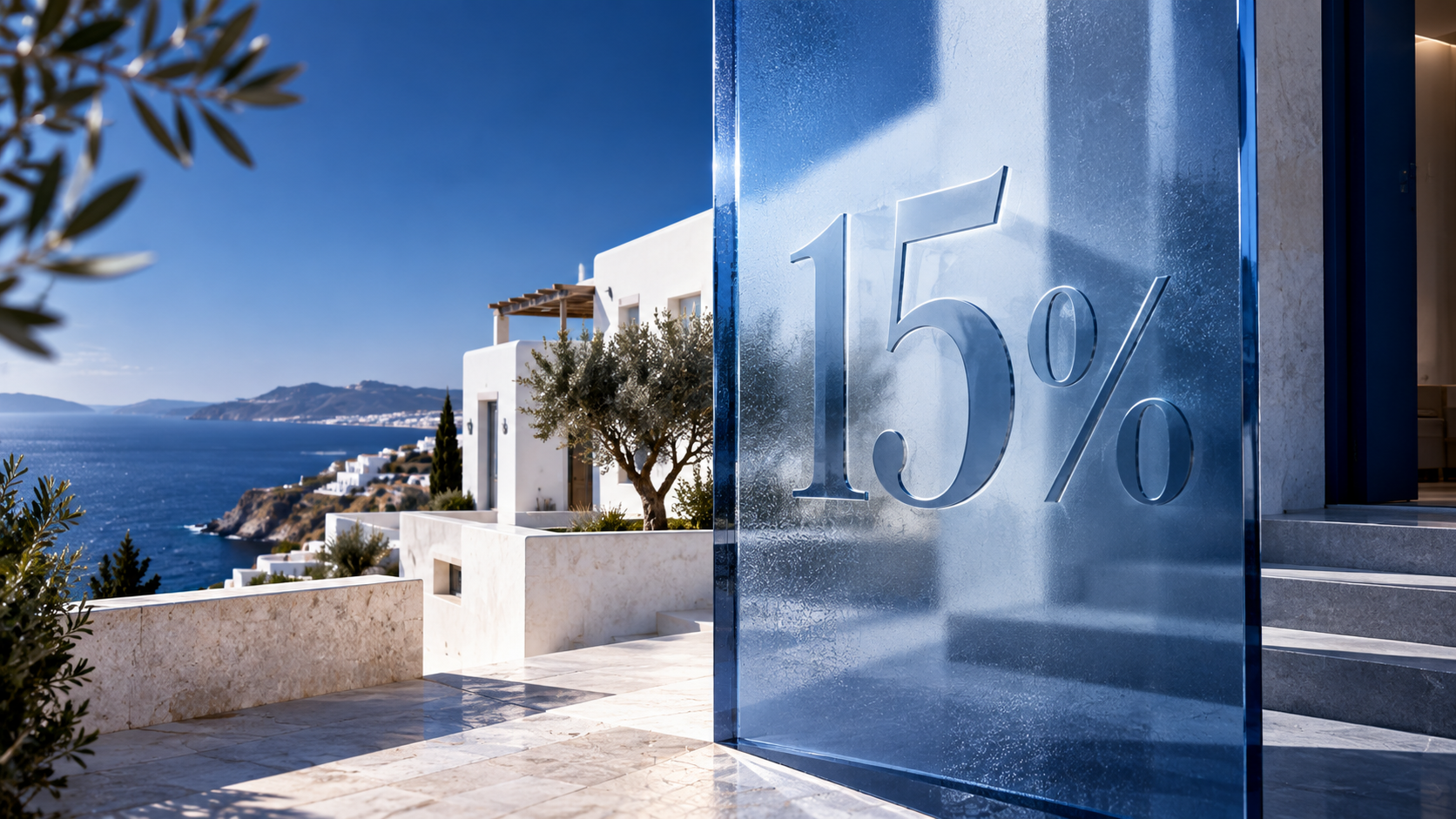
Greece has proposed to raise the property transfer tax for non-European Union buyers from 3% to 15% on January 1, 2027. This potential increase could significantly raise acquisition costs in the country and impact buyers interested in the Golden Visa program unless exemptions are introduced.
The investor visa program is designed to attract foreign investment by offering residency permits to individuals who make qualifying property investments in Greece. A steep rise in acquisition costs due to the higher tax could deter potential visa investors, as the overall investment becomes much more expensive.
Why Is Greece Increasing this Real Estate Tax?
The property transfer tax is a fee charged by a government when ownership of real estate changes hands. It’s usually a percentage of the property’s sale price or value at the time of sale.
Prime Minister Kyriakos Mitsotakis announced the increase ahead of the upcoming national elections scheduled for spring 2027.
If approved as announced, it would take place just months before voters head to the polls. The government argued that the measure aims to address housing affordability in Greece and alleviate pressure from foreign investment on property prices.
Currently, buyers continue to pay a 3% tax when purchasing property.
The new rate would substantially increase costs. For example, purchasing a property worth €800,000 in Athens could increase the transfer tax from approximately €24,000 to €120,000. Even for smaller investments, such as a €250,000 property, the tax would jump from €7,500 to €37,500.
The New Tax Strategy at Times of Declining Golden Visa Applications
The potential new tax puts additional pressure on Greece’s Golden Visa program at a time when applications are already declining sharply. This decline follows major policy changes that significantly raised investment thresholds and tightened property regulations.
New applications for Greece’s Golden Visa program have decreased from 4,553 in early 2025 to 2,551 in early 2026. This sharp decline reflects a policy-driven cooling as Greece has intentionally reshaped the Golden Visa to curb speculative real estate demand, reduce pressure on housing markets, and shift the program toward higher-value, long-term investments.
As the overall cost of investing in a Greek residency visa rises relative to other Southern European markets, this may deter interest.
Reactions to the proposed tax raise include criticism from investment immigration specialists, who argue that it will not resolve the housing crisis. They believe the crisis is more related to a lack of available homes than to foreign buyers. Moreover, they argue that foreign investors can help improve the housing market by converting unused properties into residential units. High taxes could discourage these beneficial investments.
Industry analysts also indicate that housing scarcity in Greece arises from several factors, including vacant properties and limited construction, rather than solely from foreign demand. The government is attempting to strike a balance between promoting homeownership for locals and attracting foreign investment.